
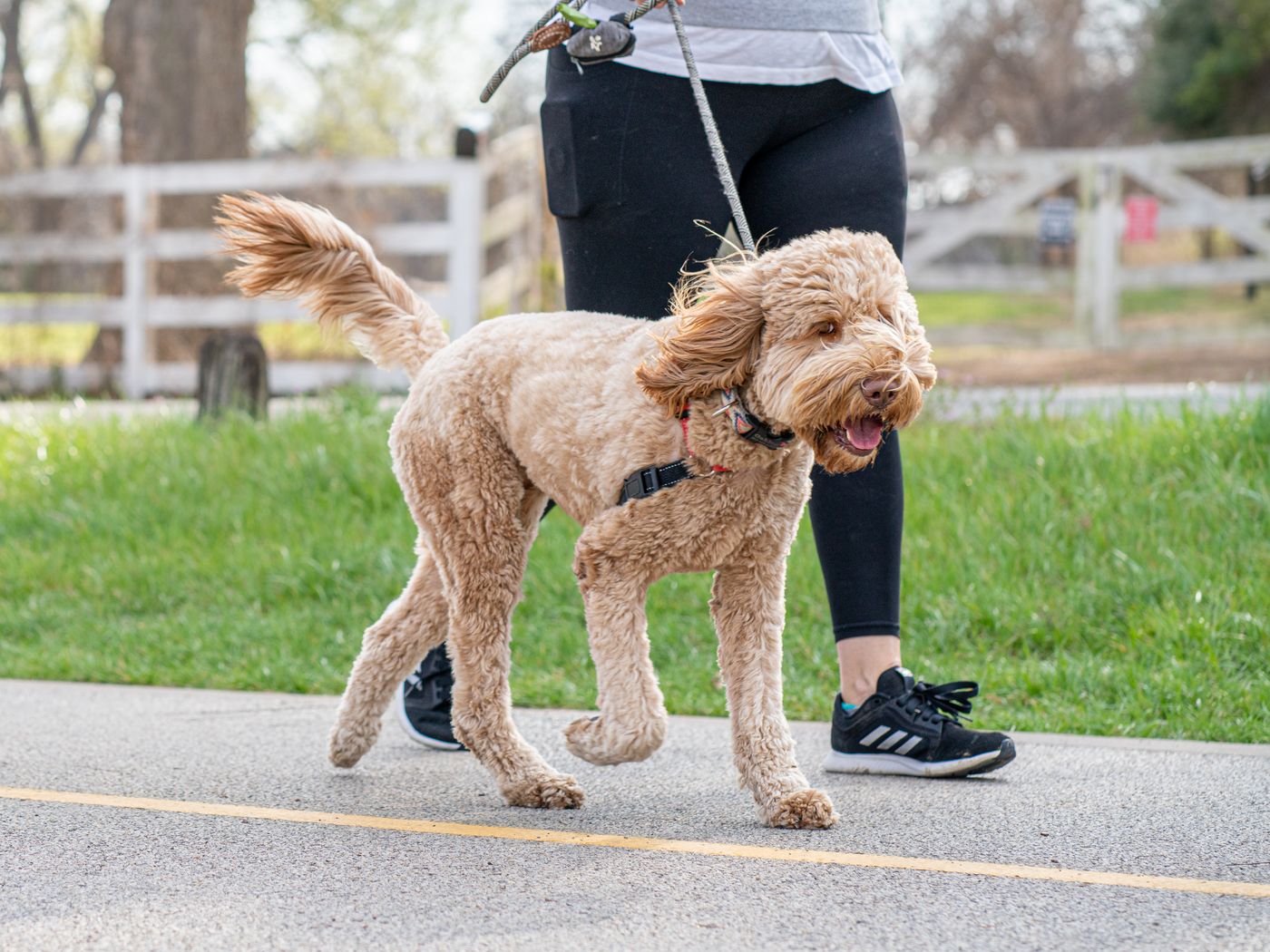
Judge the fit while the dog moves
Harness fit must be checked while the dog moves. Measure at the points shown by the manufacturer, then watch the straps during walking, sitting, turning, and backing up. A harness that looks tidy while standing can still rub the armpits, rotate across the chest, or become easy to escape.
Prioritize adjustment range, load-bearing stitching, buckle position, and shoulder clearance over labels such as “no pull.” A harness is equipment, not a training method. Recheck the fit after the webbing settles and whenever coat thickness, body condition, or puppy growth changes.
Product types worth comparing
Back-clip harnesses are simple for calm walkers. Front-clip or dual-clip harnesses can help with handling when used correctly. Step-in and padded vest harnesses may suit small dogs or dogs that dislike overhead gear. These options can all be useful, but they solve different jobs. The best starting point is the product type that matches the current routine with the least extra maintenance.
Harness photos often hide the parts that matter most: where the chest strap sits, how far the girth adjusts, and whether the leash ring pulls the body off balance. Favor listings that show the harness on dogs from several angles and include a clean diagram of every measurement.
What to check on the merchant page
Check neck and chest ranges, adjustment points, strap width, hardware material, washing instructions, leash attachment position. Those details are more useful than a long feature list because they affect whether the product will still work after the first week.
Confirm the live listing before buying because harness sizes, colors, buckle styles, and return windows can change. Petpickr keeps the comparison focused on fit and use case; the seller page is still the source for current price, inventory, shipping, warnings, and exact variant details.
Claims that deserve caution
Be careful with claims like no-pull, escape-proof, tactical, or training-ready. A product can be useful without pretending to solve every problem. Strong claims should come with clear measurements, instructions, limitations, and maintenance guidance.
A harness can make walks easier, but it does not replace training help, pain assessment, or behavior support. If pulling, reactivity, limping, neck sensitivity, or escape behavior is part of the decision, use the product search alongside advice from a qualified trainer or veterinarian.
How to choose between similar options
Between two harnesses, prioritize the one that explains fit in measurable terms. Clear chest ranges, strap width, leash-ring placement, washing instructions, and hardware notes are more useful than breed examples or a promise that one design works for every walker.
Daily workload matters because a harness gets handled outside, in rain, and near mud. Complicated buckles, stiff straps, slow drying fabric, or hard-to-clean padding can turn a good-looking option into gear that stays by the door unused.
Internal links for the next step
For related buying context, compare dog travel checklist, GPS dog trackers, pet travel essentials. These pages cover adjacent routines so the final choice is not made from one product listing alone.
Practical verdict
For best dog harnesses for everyday walks, choose the option that gives the clearest fit, easiest maintenance, and most honest limitations. Skip products that hide measurements, lean on unsupported claims, or make the owner guess how cleaning and setup will work. The best pick is the one that fits the pet and the home after the novelty wears off.
FAQ
What should I compare first?
Start with chest and neck fit from the size chart. That detail usually decides whether the product is even worth comparing further.
What is the biggest mistake buyers make?
The biggest mistake is trusting a broad label before checking adjustment range and where the straps sit. Product names are less reliable than measurements, materials, care instructions, and use limits.
Should I choose the most feature-heavy option?
No. A second clip, handle, reflective strip, or padded panel helps only when it matches the dog and route. If the extra part adds bulk or confusion, a simpler well-fitted harness is usually easier to use.
When should I avoid buying immediately?
Pause when the listing lacks clear sizing, hardware details, or safe-use limits, or when the product decision is connected to health, pain, anxiety, medication, diet, or behavior concerns.
Fit is a moving test
A harness can look correct while the dog stands still and shift badly during walking, turning, or backing up. Evaluate shoulder movement, strap position, and escape risk together.
A practical pre-purchase worksheet
- Measure girth at the manufacturer’s stated point.
- Record neck-base and chest measurements when the chart requests them.
- Check whether the dog falls between sizes.
- Look for adjustment points on both sides of the chest.
- Keep straps away from the armpit crease.
- Check that buckles do not sit under the front leg.
- Inspect stitching at every load-bearing ring.
- Confirm the return policy allows a clean indoor fitting.
Which situation sounds like yours?
| Household situation | What deserves priority |
|---|---|
| Dog that pulls forward | Watch for strap migration and restricted shoulder reach. |
| Dog that backs out | Prioritize secure geometry and test indoors with a loose leash. |
| Deep-chested dog | Multiple adjustment points are often more useful than padding. |
| Growing puppy | Re-measure frequently; adjustment range is not unlimited. |
Try this before ordering
Fit the harness indoors, slide fingers under each strap according to the maker’s guidance, then observe walking, sitting, turning, and backing up. Recheck after five minutes because webbing can settle.
Next step
Keep comparing before you buy
Use best dog harnesses for everyday walks alongside related guides and category archives before checking merchant pages.