
Choose the job before the tool
Start with the exact grooming job: lifting loose surface hair, reaching undercoat, checking tangles, trimming nails, or cleaning up after a bath. A large kit is poor value when most pieces do not match the dog’s coat or the owner’s handling confidence.
Inspect every pin, tooth, blade, guard, seam, and grip before use. The dog should have nonslip footing and an easy way to pause. Mats close to skin, painful handling, skin changes, or uncertainty around cutting tools are reasons to stop and use a qualified groomer or veterinarian.
Product types worth comparing
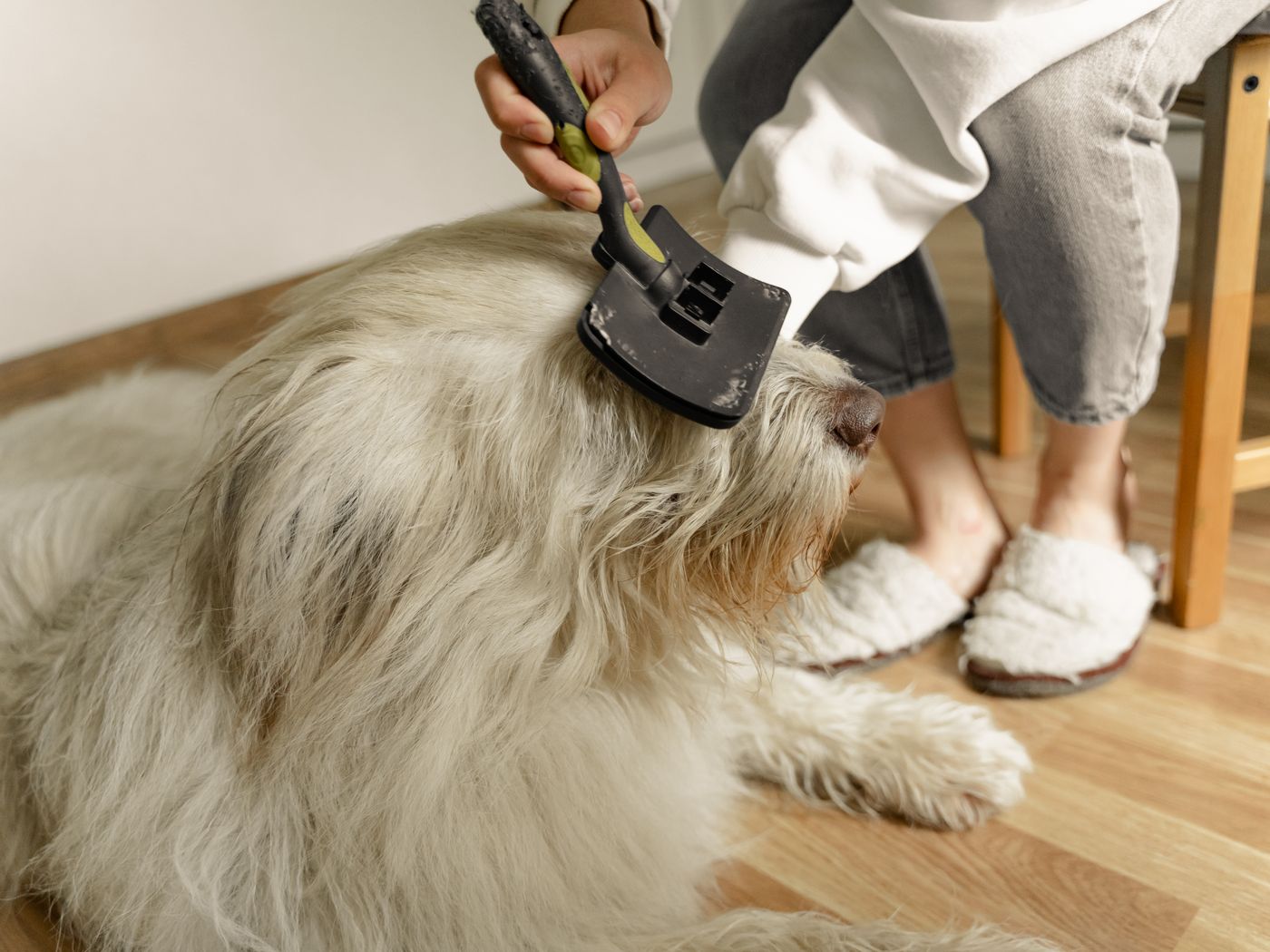
Slicker brushes can help many coats when used gently. Bristle brushes and grooming gloves suit lighter maintenance. Nail tools and de-shedding tools need extra care and instructions. These options can all be useful, but they solve different jobs. The best starting point is the product type that matches the current routine with the least extra maintenance.
Grooming-tool photos should show tooth length, pin density, handle shape, and the coat type being worked. A shiny brush head says little if the listing does not show whether it suits short coats, double coats, curls, or sensitive skin.
What to check on the merchant page
Check intended coat type, pin or blade design, handle grip, cleaning method, safety warnings, replacement parts. Those details are more useful than a long feature list because they affect whether the product will still work after the first week.
Confirm current tool size, blade or pin details, cleaning method, replacement parts, and warnings on the seller page. Petpickr keeps the guide original and avoids marketplace review copying, so live merchant facts need a final check.
Claims that deserve caution
Be careful with claims like painless grooming, professional results, or works for every coat. A product can be useful without pretending to solve every problem. Strong claims should come with clear measurements, instructions, limitations, and maintenance guidance.
Home grooming tools cannot replace care for mats close to skin, wounds, ear problems, nail injuries, or painful handling. If grooming causes distress or the coat condition changes suddenly, use a groomer or veterinarian before relying on a new tool.
How to choose between similar options
For similar tools, choose the one that explains coat match and safe use instead of promising one brush for every dog. A clear limitation is more trustworthy than a universal claim.
Grooming tools add cleaning, hair disposal, storage, and training time. A tool that is quick to rinse and comfortable to hold is more likely to become part of a calm routine.
Internal links for the next step
For related buying context, compare dog grooming brushes, pet hair removers, reduce pet hair at home. These pages cover adjacent routines so the final choice is not made from one product listing alone.
Practical verdict
For best dog grooming tools for home use, choose the option that gives the clearest fit, easiest maintenance, and most honest limitations. Skip products that hide measurements, lean on unsupported claims, or make the owner guess how cleaning and setup will work. The best pick is the one that fits the pet and the home after the novelty wears off.
FAQ
What should I compare first?
Start with coat type and grooming job. That detail usually decides whether the product is even worth comparing further.
What is the biggest mistake buyers make?
The biggest mistake is trusting a broad label before checking tool edge, pressure, and coat match. Product names are less reliable than measurements, materials, care instructions, and use limits.
Should I choose the most feature-heavy option?
No. Retractable pins, self-cleaning buttons, guards, and ergonomic handles help only if the tool is right for the coat. The wrong head design can make grooming slower or more uncomfortable.
When should I avoid buying immediately?
Pause when the listing lacks coat guidance, safety notes, or cleaning instructions, or when the product decision is connected to health, pain, anxiety, medication, diet, or behavior concerns.
Build a small kit around actual tasks
A crowded grooming kit can hide the tools you use and leave sharp items unsecured. List the recurring jobs first—surface hair, tangles, paws, nails, bath cleanup—then buy only for those jobs.
A practical pre-purchase worksheet
- Write down coat type and known sensitive areas.
- Separate cutting tools from brushing tools.
- Check that comb spacing matches the coat.
- Choose nail tools with a clear view of the working area.
- Provide nonslip footing for every session.
- Store scissors and blades where pets and children cannot reach them.
- Clean and fully dry tools before storage.
- Replace cracked handles, bent pins, and dull cutting edges.
Which situation sounds like yours?
| Household situation | What deserves priority |
|---|---|
| Weekly loose-hair control | One comfortable brush and a washable mat may be enough. |
| Tangle-prone feathering | Add a comb for checking work rather than pulling blindly. |
| Nail maintenance | Choose visibility and control over motor power or accessory count. |
| Skin changes or painful handling | Stop grooming and ask a veterinarian or qualified groomer. |
Try this before ordering
Lay out the current routine from setup to cleanup and time it. A new tool should remove a specific difficult step, not merely add another object to sanitize and store.
Next step
Keep comparing before you buy
Use best dog grooming tools for home use alongside related guides and category archives before checking merchant pages.